
Summary
Medication management in personal care ensures your loved one receives the right medication at the right time while maintaining independence and safety. Understanding how communities handle this critical task can help your family make a confident decision about care.
- Personal care teams work with each resident to determine the right level of support, from simple reminders to full administration and monitoring by trained staff members.
- Secure storage, trained administration, regular audits, and clear protocols create multiple safety layers that protect against mix-ups and complications.
- Strong partnerships with pharmacies and physicians—including automatic refills, pharmacist consultation, and coordination of care—eliminate gaps in medication supply.
- Detailed record-keeping allows care teams to spot patterns, track side effects, and share critical information with healthcare providers.
- Families receive regular updates, can review administration records, and remain involved in health decisions throughout the resident's stay.
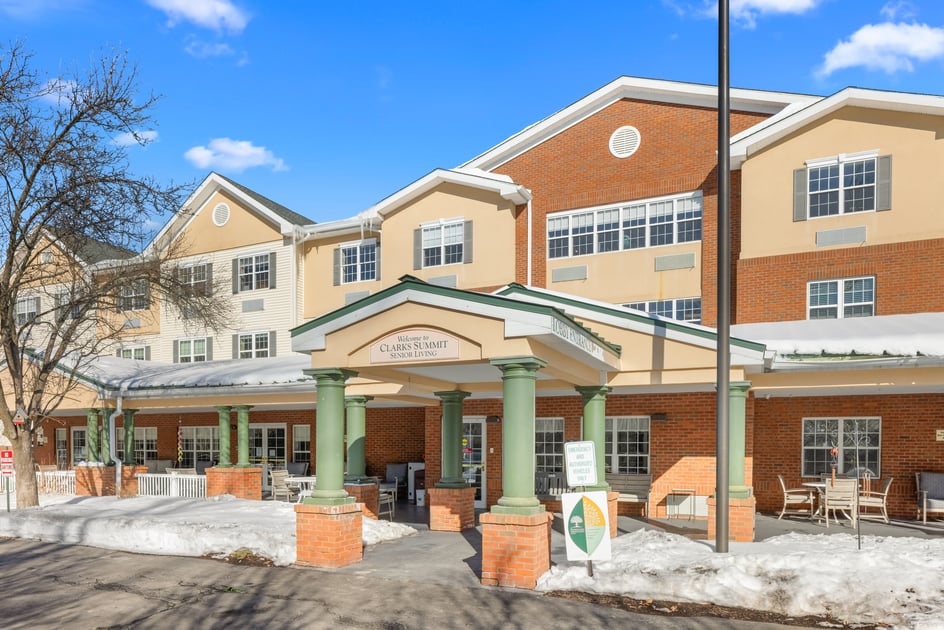
If your parent is moving to personal care, the medication question usually comes first. Will the pills be given on time? Will someone notice if something seems off? Understanding medication management in personal care makes the decision easier. At Clarks Summit Senior Living in Clarks Summit, PA, trained team members handle the daily routine so residents keep as much independence as possible and families gain real peace of mind.
Understanding Medication Support in Personal Care
Support looks different for every resident. Some only need a reminder at breakfast. Others need help opening a bottle or a team member to bring each dose at the right hour. The Personal Care team at Clarks Summit Senior Living works with residents and families on an approach that respects independence while covering what’s actually needed.
Good records matter as much as good timing. The team notes when each dose is given and watches for side effects, a skipped pill, or a change in how someone seems. Those notes make it possible to spot patterns early and share them with physicians.
How Seniors Get Medications in Care
How seniors get medications in care starts with a full review at move-in. Families share the current list, and the team coordinates with the pharmacy and physicians to set up a reliable routine. Many communities use pharmacies that package each dose individually, which keeps tracking simple and accurate.
From there, team members bring medications on schedule, whether that’s morning, evening, or several times a day. They stay while the resident takes each dose, confirm it went down comfortably, and watch for any reaction. That hands-on habit is often what catches a small problem before it grows.
Medication Safety in Care Communities
Medication safety in care communities comes from several layers working together:
- Secure storage that prevents mix-ups or accidental access
- Administration only by trained team members
- Regular audits to confirm accuracy
- Attention to drug interactions whenever a new prescription is added
- Clear protocols for over-the-counter items, vitamins, and supplements
Each layer backs up the others, helping protect residents from the complications that can follow when medications are managed loosely at home.
Coordination With Healthcare Providers and Pharmacies
Strong personal care medication assistance depends on good partners. The team keeps regular contact with each resident’s physicians, reports changes in condition, and requests refills before supplies run low, so gaps are rare.
Senior living pharmacy services typically add:
- Automatic refills and delivery straight to the community
- Pharmacist consultation when a question comes up
- Expertise in prescription management for seniors, including simplifying regimens where physicians agree
For families, that means no more juggling pharmacy runs or worrying about an empty bottle.
What Families Can Expect
Expect regular updates on the medication routine and any changes a physician makes. Questions are welcome, and family involvement in health decisions is encouraged. On a visit, you can review the administration records and raise any concerns.
Those records come in handy at medical appointments, too. This openness is a big part of why families in their reviews describe the Clarks Summit team as people who truly care. A few questions families ask most often:
Can my parent keep managing some medications on their own?
Often, yes. The team assesses what a resident can safely handle and revisits the plan as needs change.
What if my parent refuses a dose?
It’s documented, the physician is informed when appropriate, and the team talks with the resident and family about why.
Who do I call with a medication question?
The care team is your first contact, and they loop in the pharmacy or physician as needed.
Making the Transition Smooth
A move to personal care goes more smoothly when the medication piece is planned ahead. Bring:
- A complete list with dosages and prescribing physicians
- Enough supply to cover the first couple of weeks
- Your preferred pharmacy’s contact information so prescriptions can transfer
During the first weeks, the team watches how the new routine is landing and adjusts timing where it helps, never at the expense of safety. Once things settle, the rest of life takes over: home-style meals with tableside service, the daily tavern happy hour, and mountain views from a recently renovated community in the historic Abington area. If you’re balancing a parent’s needs with your own household, the community’s guide on balancing family life with a parent’s care is a helpful read.
Medication Support You Can Count On
Medication management shouldn’t be the thing that keeps you up at night. At Clarks Summit Senior Living, trained team members, careful records, and close pharmacy partnerships handle it every day. Schedule a personalized tour to meet the team and ask how your parent’s routine would work here.